
Last updated November 2, 2026
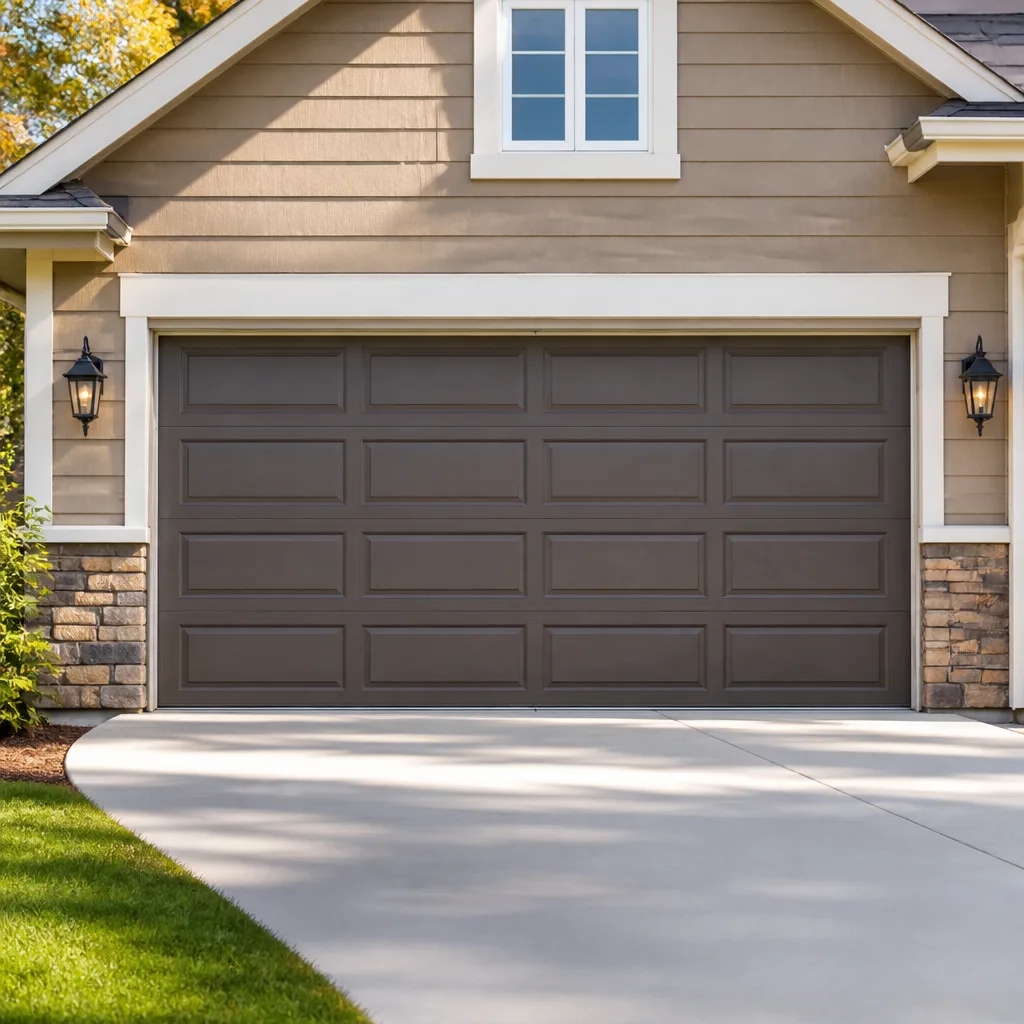 Raised-panel steel
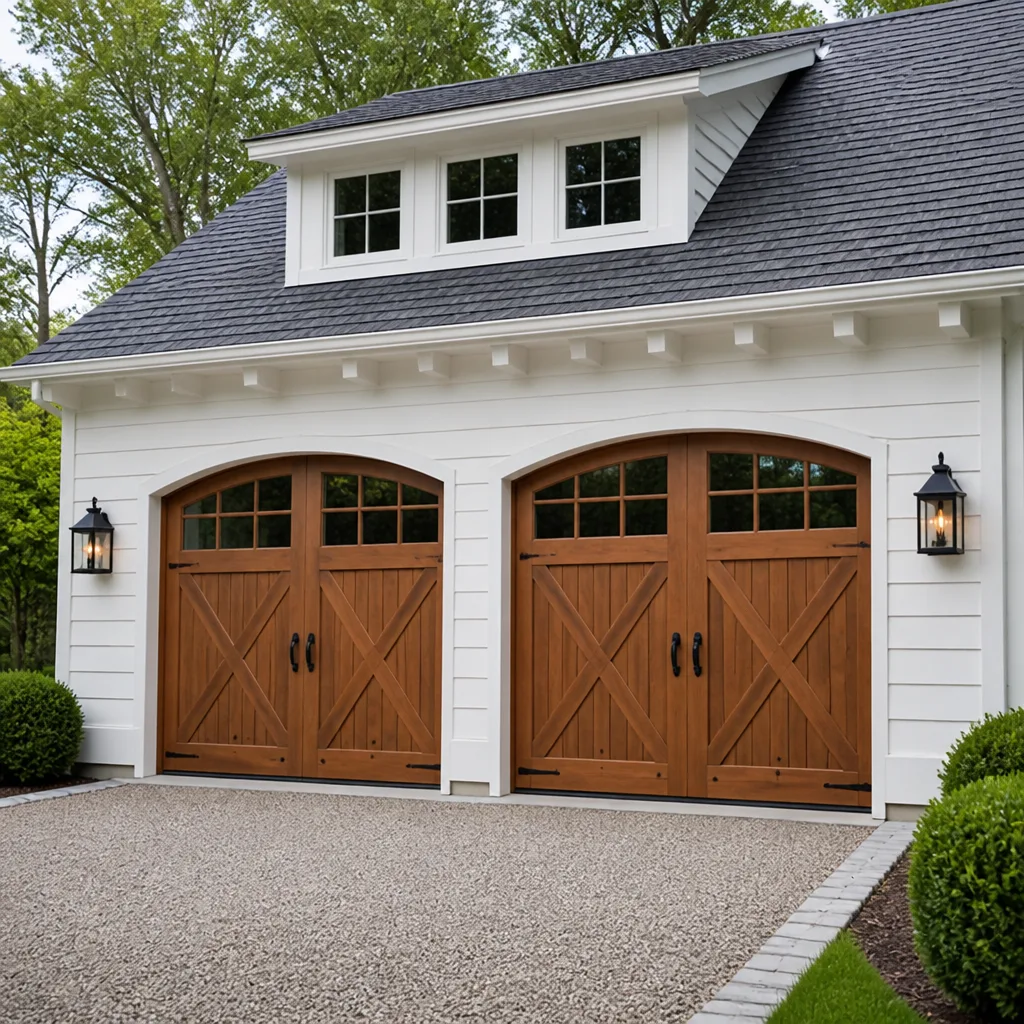 Carriage house
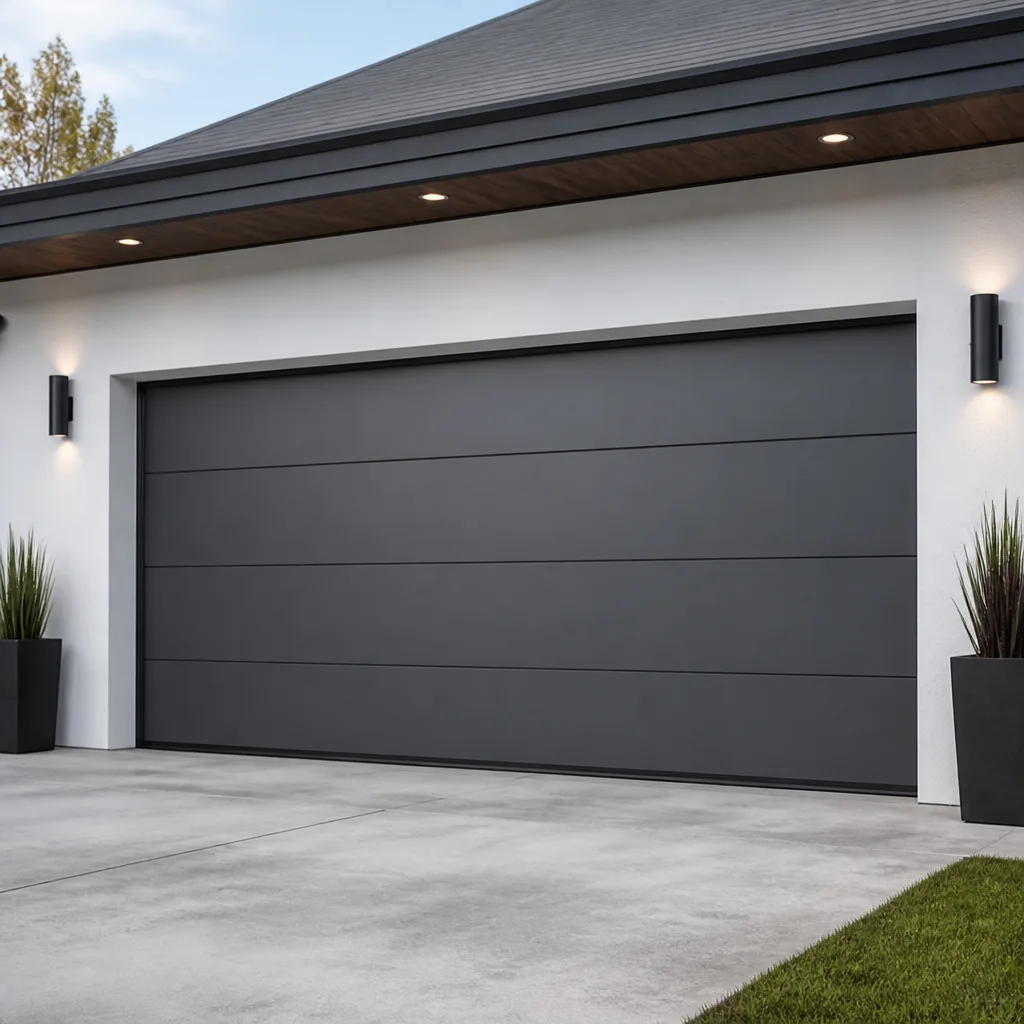 Modern flush
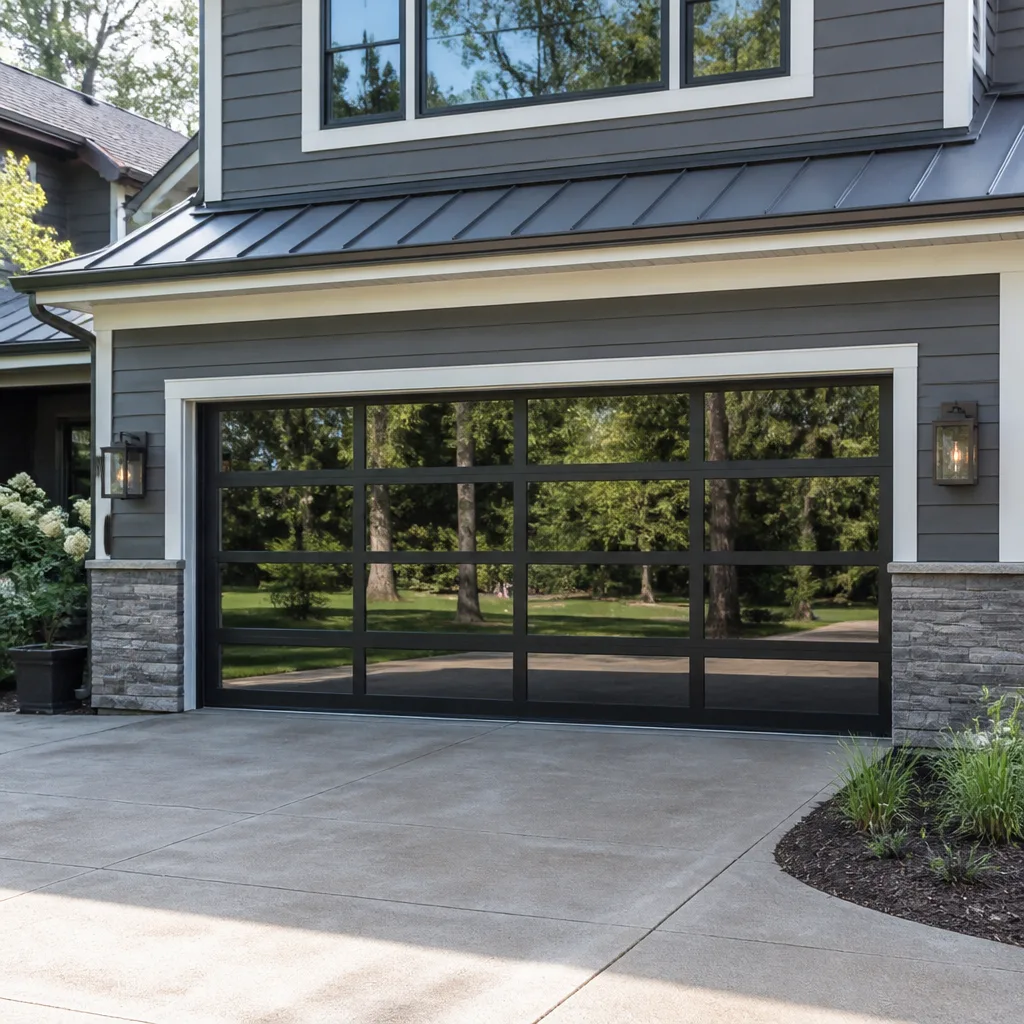 Full-view glass
 LiftMaster openers
 Chamberlain openers
Full 25-point door and opener safety check with every visit - springs, cables, rollers, tracks, and your LiftMaster or Chamberlain opener included
You get a price before we start. It does not change when the truck arrives.
Get your free estimateChoosing the Right Garage Door Brand: A Buyer’s Guide for Carmel Valley
The brand with the loudest advertising budget and the brand best suited for a Carmel Valley home are rarely the same brand. The difference shows up in year eight, not year one, when coastal humidity has worked its way into the hardware and UV exposure has faded a lesser finish. This guide gives you a framework for evaluating garage door brands the way a technician would: by what holds up in this specific climate, what can actually be serviced quickly when something fails, and what costs you less over twenty years rather than at the moment of purchase. For a deeper dive, see The Complete Garage Door Repair Guide for Carmel Valley Homeowners. If you’re researching brands for a Carmel Valley home, you’ll leave with a clearer decision path than any spec sheet comparison will give you.
Quick Answer
The best garage door brand for a Carmel Valley home is the one that offers the right steel gauge, insulation level, and panel construction for your specific exposure, and that has a reliable local parts channel. For most Carmel Valley homeowners, that means a door from Amarr, Wayne Dalton, or Raynor with a 24-gauge steel face, a minimum R-12 insulation value, and a brand whose distribution network keeps replacement parts within days rather than weeks in San Diego County.
Styles & brands we work with
- Raised-panel steel
- Carriage house
- Modern flush
- Full-view glass
- LiftMaster openers
- Chamberlain openers
Table of Contents
- Steel Gauge and Why It Matters More Than Brand
- Insulation R-Value: What R-12 vs R-18 Actually Means in Carmel Valley
- Construction Method: Sandwich vs Pan vs Steel Frame
- Why Local Parts Availability Beats Brand Prestige
- HOA Compliance: What Carmel Valley HOAs Actually Require
- The Multi-Brand Service Advantage
- A Practical Look at the Brands You’ll Encounter
- What Should a Good Garage Door Cost in Carmel Valley
Steel Gauge and Why It Matters More Than Brand
Steel gauge is the single most misrepresented number in garage door marketing. Gauge refers to steel thickness, and the scale runs backward: a lower number means thicker steel. A 24-gauge door is thicker and more dent-resistant than a 25-gauge door, which is thicker than a 27-gauge door. Most builder-grade doors are 27-gauge. Most premium residential doors are 24-gauge. The difference is roughly a third of a millimeter, but over a decade of daily use in a coastal climate, that difference compounds.
In Carmel Valley, we see two specific failure patterns tied to gaage choice. First, the afternoon sun on west-facing garage doors can push surface temperatures well past 140°F in summer, which causes thinner steel to expand and contract more aggressively at the seams. Second, the marine layer that rolls through Torrey Hills and Pacific Highlands carries enough salt and moisture to accelerate corrosion at any scratch or fastener penetration. A 24-gauge door simply has more material to lose before it fails. That’s not brand loyalty talking. That’s physics.
Here’s how to think about gauge when comparing brands:
- 27-gauge: Acceptable for garages that face north, sit under deep eaves, or see minimal direct sun. Common in entry-level doors from any manufacturer. Expect visible dents from a basketball or bike handlebar.
- 25-gauge: The middle tier. Better dent resistance, modest premium. A reasonable compromise for east-facing or partially shaded garages.
- 24-gauge: The standard for west-facing and south-facing exposures in Carmel Valley. You’ll find this in Amarr’s mid-tier Lincoln and Oak Summit lines, and in comparable Wayne Dalton models.
One note from our service work: gauge ratings apply to the steel skin, not to the door’s overall stiffness. A 24-gauge skin on a poorly constructed frame will still oil-can in the wind. That’s why gauge should be evaluated alongside construction method, which we’ll cover below.
Insulation R-Value: What R-12 vs R-18 Actually Means in Carmel Valley
Insulation R-value measures resistance to heat flow. Higher numbers mean better insulation. A door rated R-9 has roughly half the insulating performance of an R-18 door. But here’s the reality check most more guides & resources skip: Carmel Valley’s climate rarely drops below 40°F and rarely exceeds 85°F at the garage door face for more than a few hours at a time. The thermal load on your garage door is mild compared to Phoenix or Minneapolis.
So what does R-value actually buy you in this climate? Three things. First, it stabilizes garage temperature enough to protect stored items from the daily swing between marine-layer cool and afternoon heat. Paint cans, electronics, and anything in cardboard boxes age faster in a garage that swings 25 degrees daily. Second, an insulated door is significantly quieter. The insulation dampens the panel resonance that makes uninsulated doors sound like a sheet metal drum every time the wind gusts off the lagoon. Third, if your garage has living space above it or shares a wall with the house, the door is part of the thermal envelope, and R-value matters for whole-house comfort.
But the honest guidance for Carmel Valley: R-12 is the functional floor for most homes. R-18 is worth the premium only if your garage is attached to conditioned space, you use it as a workshop or gym, or the door faces west and absorbs full afternoon sun. Paying for R-18 on a detached garage that stores yard tools is spending money on a spec sheet number you’ll never feel. We’ve had this exact conversation with homeowners in Carmel Valley’s newer developments, and most are relieved to hear the mid-tier option is genuinely adequate.
Here’s the insulation breakdown by door construction:
- Single-layer (non-insulated): R-value near zero. Steel skin over a frame. No thermal or acoustic benefit. Not recommended for any attached garage.
- Double-layer (polystyrene): Typically R-6 to R-9. A rigid foam board bonded to the back of the steel skin. The sweet spot for most Carmel Valley garages.
- Triple-layer (polyurethane): Typically R-12 to R-18. Steel skin, injected foam core, and a steel or vinyl back. The quietest option and the right call for attached garages or doors facing west.
Construction Method: Sandwich vs Pan vs Steel Frame
Brand names get the attention, but construction method determines how a door behaves over twenty years. There are three approaches, and they’re not equally represented across brands.
Pan construction is the traditional method. Each panel is a formed steel skin with stiles, or vertical supports, riveted to the back. Pan doors are straightforward, affordable, and easy to field-repair. A damaged panel can be swapped without disturbing the rest of the door. The tradeoff is that pan doors are more likely to develop oil-canning, that wavy look on the surface under certain light angles. They also carry insulation less effectively because the foam sits between stiles rather than bonded to the full panel surface.
Sandwich construction bonds two steel skins to a solid foam core, creating a single structurally integrated panel. Sandwich doors are stiffer, quieter, and hold their finish better over time. They’re also more expensive, and a damaged panel is harder to replace in the field because the panel is a sealed unit. Most premium Amarr and Wayne Dalton doors use sandwich construction in their top tiers.
Steel frame with overlay is the third category, most common on premium carriage-house styles from brands like Raynor. The structural load is carried by a steel frame, and the visible face is a decorative overlay. These doors look exceptional and last, but the overlay can separate from the frame if the adhesive breaks down under prolonged UV and heat. We’ve seen this on west-facing doors after roughly a dozen years, and it’s not a brand-specific problem. It’s a material reality of adhesive-bonded faces in coastal sun.
For most Carmel Valley homes, sandwich construction is the default recommendation for performance, with pan construction as the value alternative when budget is tight and the door faces north. Frame-and-overlay is a design choice, and the premium is justified if curb appeal is the priority.
Why Local Parts Availability Beats Brand Prestige
A garage door brand is only as good as its nearest distribution center. This is the factor most national guides entirely ignore, and it’s the one that will determine whether a spring replacement takes one day or two weeks when your door fails on a Tuesday morning.
Here’s the practical reality. Every garage door eventually needs a spring, a roller, a hinge, or a panel. Those parts are brand-specific at the panel level and somewhat standardized at the hardware level. When a brand has a regional distributor serving San Diego County, a technician can source a replacement panel or a proprietary bracket same-day or next-day. When a brand’s nearest distributor is in Los Angeles or Phoenix, that same repair becomes a multi-day or multi-week wait while parts ship across the country.
Amarr, Wayne Dalton, and Raynor all maintain distribution relationships that serve the San Diego market well. Craftsman, by contrast, operates through retail channels, and while the openers are widely supported, replacement door panels can be a sourcing challenge depending on the model’s vintage. None of this appears on a spec sheet, and no brand’s marketing team will mention it. But it’s the difference between a two-hour repair and a two-week headache.
This is also where the multi-brand service model earns its keep. A company that works on eight major brands, including LiftMaster, Chamberlain, Genie, Clopay, Amarr, Wayne Dalton, Craftsman, and Raynor, has already built relationships with multiple parts channels. We’re not calling one distributor and hoping. We’re calling whichever one has the part on the shelf. That redundancy is invisible until you need it, and then it’s the entire ballgame. Read more about our garage door repair approach in Carmel Valley if you want the full picture on how parts sourcing works in practice.
HOA Compliance: What Carmel Valley HOAs Actually Require
Carmel Valley is one of the more architecturally regulated communities in San Diego County. Most neighborhoods, from Del Mar Highlands to Carmel Country Highlands to the newer builds around Pacific Highlands Ranch, fall under HOA covenants that specify garage door design. If your door doesn’t match, you’ll hear about it from the architectural review committee before the contractor’s truck leaves the driveway.
What HOAs in Carmel Valley typically regulate, based on patterns across the area’s most common master-planned communities:
- Color palette. Most Carmel Valley HOAs restrict garage door colors to a defined set, usually warm neutrals: sandstone, adobe, taupe, warm gray, or white. The palette is almost always selected to match the exterior paint scheme of the community. Custom colors trigger a review process.
- Panel style. Flush panels and long-panel designs are widely accepted. Recessed panel designs are also common. The specific requirement varies by neighborhood, but most HOAs specify a panel profile that matches the original construction era of the community.
- Window placement. If windows are permitted, they’re usually limited to the top section only, and the glass pattern or frame must match neighboring homes. Many Carmel Valley HOAs restrict windowed doors entirely in certain orientations or require obscure glass.
- Materials and finish. Steel doors with a factory-applied finish are nearly always accepted. Wood doors are rare in Carmel Valley HOAs due to maintenance requirements, and when permitted, they usually require a specific paint-grade or stain-grade specification.
The brands that handle this best are the ones with broad SKU ranges that cover standard colors and panel profiles without requiring a custom order. Amarr and Wayne Dalton both maintain extensive stock of the neutral tones most commonly specified by San Diego HOAs. Raynor’s carriage-house lines also include HOA-friendly profiles, though some of the more ornate designs may trigger review in stricter communities. The advice here is simple: pull your HOA’s architectural guidelines before falling in love with a door, and verify that the color and panel profile you want is a stock SKU from the brand, not a custom order that adds four to eight weeks. If you’re starting from scratch, our garage door installation guide for Carmel Valley walks through the pre-installation steps in more detail.
The Multi-Brand Service Advantage
Why does a buyer’s guide mention the service model behind the recommendation? Because the most expensive garage door decision isn’t the initial purchase. It’s the repair that comes eight or ten years later, when the original installer has moved on, the brand has changed ownership, and the homeowner discovers their door is orphaned.
A single-brand dealer has one incentive structure: sell more of the brand they carry. When that door needs a repair that’s marginally economical, the single-brand dealer’s answer is usually a replacement quote. The math works in their favor. A service-first, multi-brand company has a different incentive: fix what’s fixable, because the repair relationship is worth more than a one-time sale. That’s the repair-first philosophy in practice, and it aligns the contractor’s interest with the homeowner’s budget.
It also matters when the brand landscape shifts. Garage door brands consolidate, discontinue lines, and change distribution agreements. In our experience, a servicer who works across eight brands, from LiftMaster openers to Clopay and Amarr doors, is less likely to declare a door obsolete prematurely because the same servicer has seen the same platform under three different brand names. That breadth is also why our recommendation of any brand carries more weight than a dealer’s recommendation of their own brand. We don’t have a quota to hit. We have a repair record that tells us which brands generate fewer callbacks in Carmel Valley’s climate.
A Practical Look at the Brands You’ll Encounter
This section isn’t a full brand directory. It’s a technician’s-eye view of the brands that make up the bulk of Carmel Valley garage doors, judged on the criteria above: gauge availability, construction quality, parts access, and HOA-friendly SKUs.
Amarr is the most common premium residential brand in the Carmel Valley market, and the installed base is large. The company’s mid-tier and upper-tier lines offer 24-gauge steel and sandwich construction, and the color palette covers the neutrals most local HOAs require. Parts are reliably available through San Diego distribution. Amarr doors are also common enough that any experienced technician has deep familiarity with their hardware and panel profiles. From a service perspective, that installed base is a quiet endorsement.
Wayne Dalton is the value-to-performance leader in many of the neighborhoods we serve. The brand offers both pan and sandwich construction, and the mid-tier models provide competitive gauge and insulation at a price point that often undercuts Amarr’s comparable lines by a meaningful margin. Wayne Dalton also maintains decent parts availability in Southern California, though their proprietary TorqueMaster spring system, found on some models, is more involved to service than a standard torsion spring setup. If you’re buying a Wayne Dalton door, we recommend confirming which spring system the model uses.
Raynor earns its reputation in the carriage-house and custom-look segment. The steel frame with overlay construction produces some of the best curb appeal available in a steel door, and Raynor’s finishes hold up respectably under coastal sun when properly maintained. The tradeoff is cost, and the overlay construction means a panel replacement is more involved than with a pan or sandwich door. For homeowners in communities where architectural character is a priority, Raynor is worth a look. For pure functional value, Amarr and Wayne Dalton are the stronger plays.
Craftsman is a case study in brand equity outpacing brand substance. The name carries weight with homeowners, but Craftsman exited the garage door manufacturing business and now licenses its name to third-party producers. The openers remain widely supported, and they’re fine entry-level units. The doors themselves vary by production era and licensing partner. There are still thousands of Craftsman doors in Carmel Valley garages, and we service them regularly, but the brand is no longer the benchmark for new installation value it once was.
For openers, separate from doors, LiftMaster and Chamberlain dominate the Carmel Valley market, and both integrate with the myQ smart-home platform, which allows phone-based monitoring and control. If you’re pairing a new door with an opener, the opener choice matters as much as the door brand. For more on the opener side, our garage door opener repair guide for Carmel Valley covers the common failure points and what to look for in a replacement.
What Should a Good Garage Door Cost in Carmel Valley
Pricing transparency is part of clear communication, so here’s what we’re seeing in the Carmel Valley market as of this writing. These are ranges for a standard 16×7 double garage door, installed, including standard hardware and labor. Custom colors, window inserts, and non-standard sizes move the numbers.
- Entry-level pan door, 25-gauge, non-insulated or R-6: $1,200 to $1,800
- Mid-tier pan or entry sandwich door, 24 or 25-gauge, R-9 to R-12: $1,800 to $2,800
- Premium sandwich door, 24-gauge, R-12 to R-18: $2,800 to $4,500
- Carriage-house or custom-look door, frame and overlay: $4,000 to $7,000+, depending on design complexity and finish
These numbers assume a door with no new opener, no major track rework, and standard spring configuration. The safest way to avoid invoice surprise is to insist that the price is quoted and agreed before any work starts, and to confirm that the quoted price covers the full install including haul-away of the old door. Reputable contractors in Carmel Valley do this as standard practice. If a contractor won’t commit to a written quote before starting, that tells you something useful about the rest of the engagement.
We also hear a version of this question constantly: is a premium brand worth the premium price? The answer depends on your horizon. If you’re selling the home within three years, a mid-tier door from Wayne Dalton or Amarr with clean aesthetics and functional hardware will clear any buyer inspection. If you’re staying ten years or more, the thicker gauge and better construction of a premium tier pay for themselves in reduced dent repair, quieter operation, and fewer hardware replacements. The homeowner’s timeline matters more than the brand name.
Common Mistakes to Avoid
- Choosing gauge by price tier instead of sun exposure. A west-facing door in Carmel Valley takes a beating that a north-facing door never will. Buy gauge for your exposure, not your budget category.
- Paying for R-18 on a detached garage. The climate doesn’t demand it, and the premium is real money better spent on better hardware or a higher-quality opener. This mistake is common because insulation numbers are flattering on a spec sheet.
- Buying a brand with no local parts channel. Every door eventually needs a panel or a proprietary bracket. When that day comes, you want the part in San Diego County, not in a warehouse two states away.
- Falling in love before checking HOA guidelines. Carmel Valley HOAs are specific about color and panel style. Falling in love with a door that requires a variance or a custom order adds weeks and frustration. Pull the guidelines first.
- Replacing the door but not addressing the opener. An old trolley opener paired with a new heavy sandwich door can strain the motor and shorten its life. If your opener is past its service life, this is the moment to replace it, and a multi-brand servicer can handle both in one appointment.
- Buying from a single-brand dealer without a second opinion. A dealer’s recommendation will always be their own brand. That’s not expertise. That’s inventory management. A service-first multi-brand company has no such conflict.
- Treating the garage door as a standalone purchase. The door, the tracks, the springs, and the opener are one mechanical system. Buying the door on brand name alone while ignoring the rest creates mismatched components and premature wear. The full system matters.
See the difference
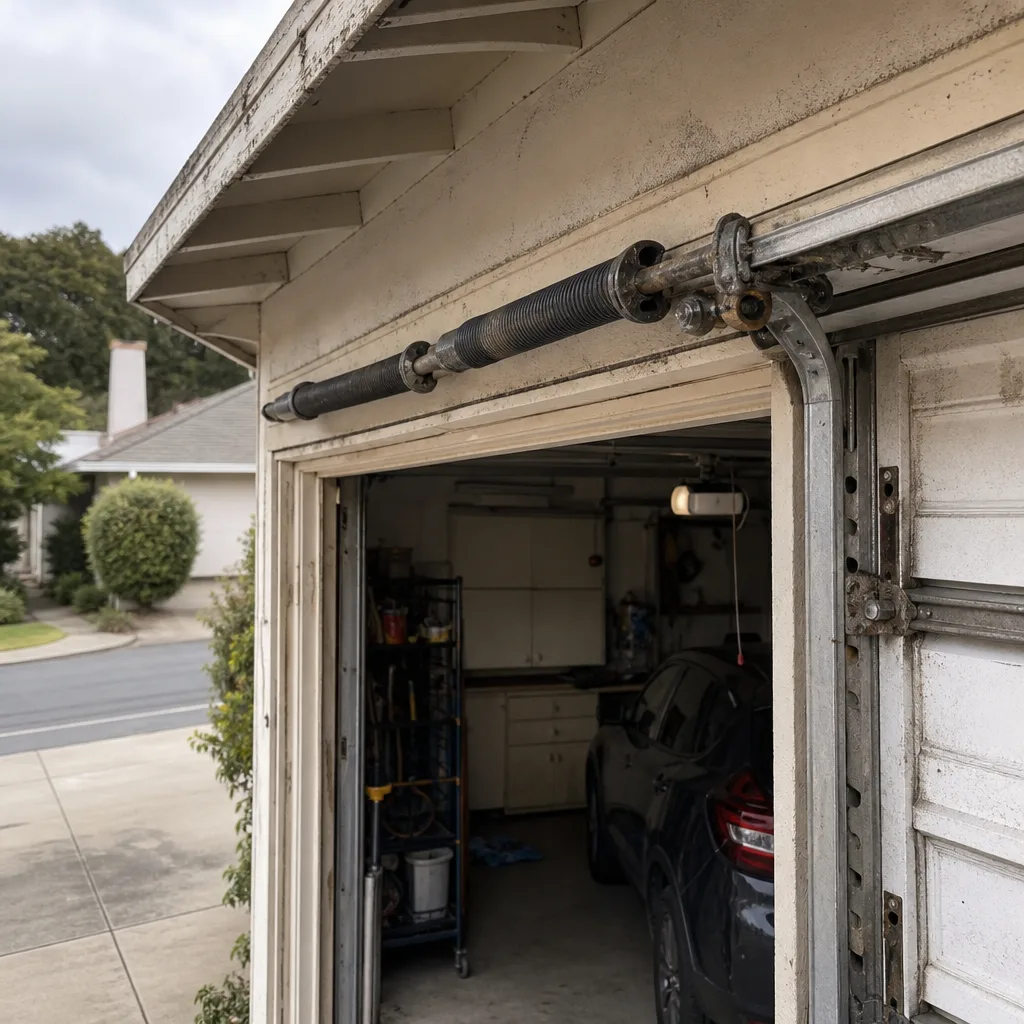 Before
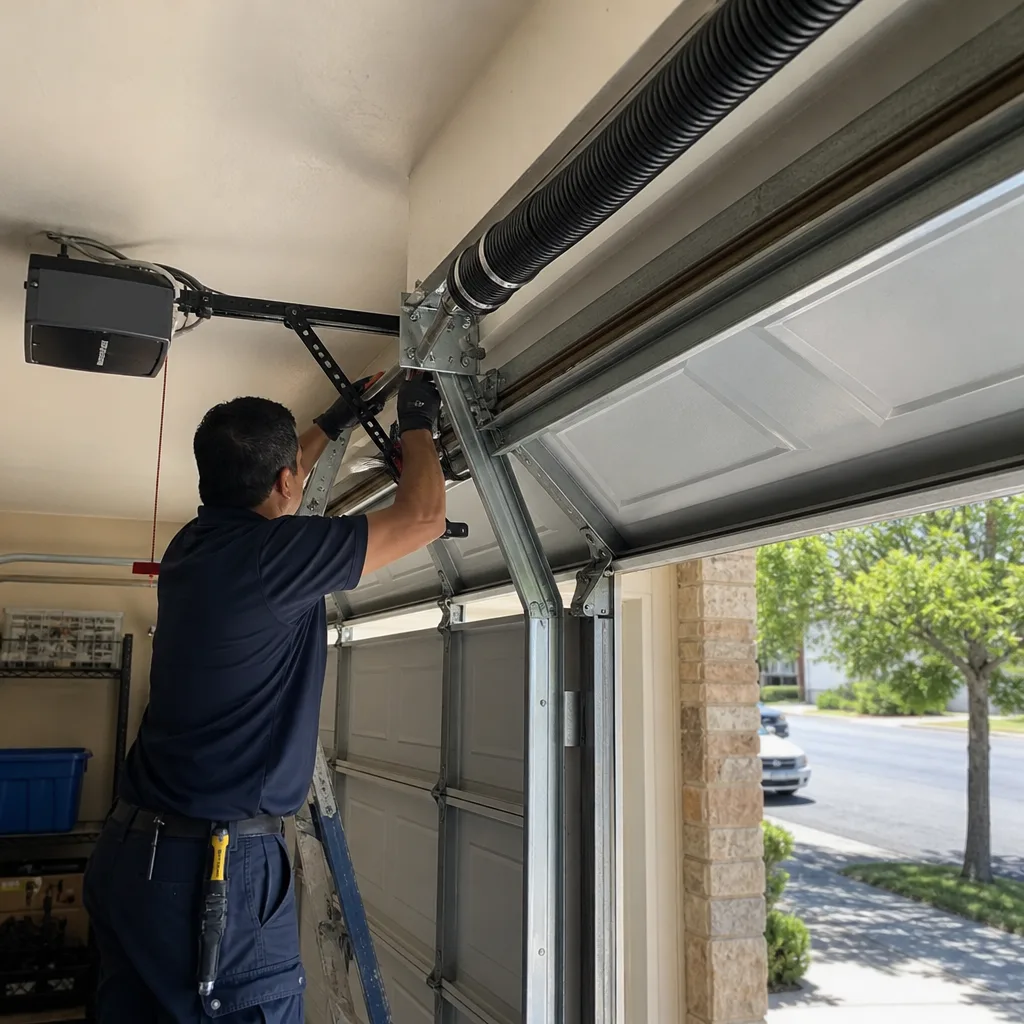 After
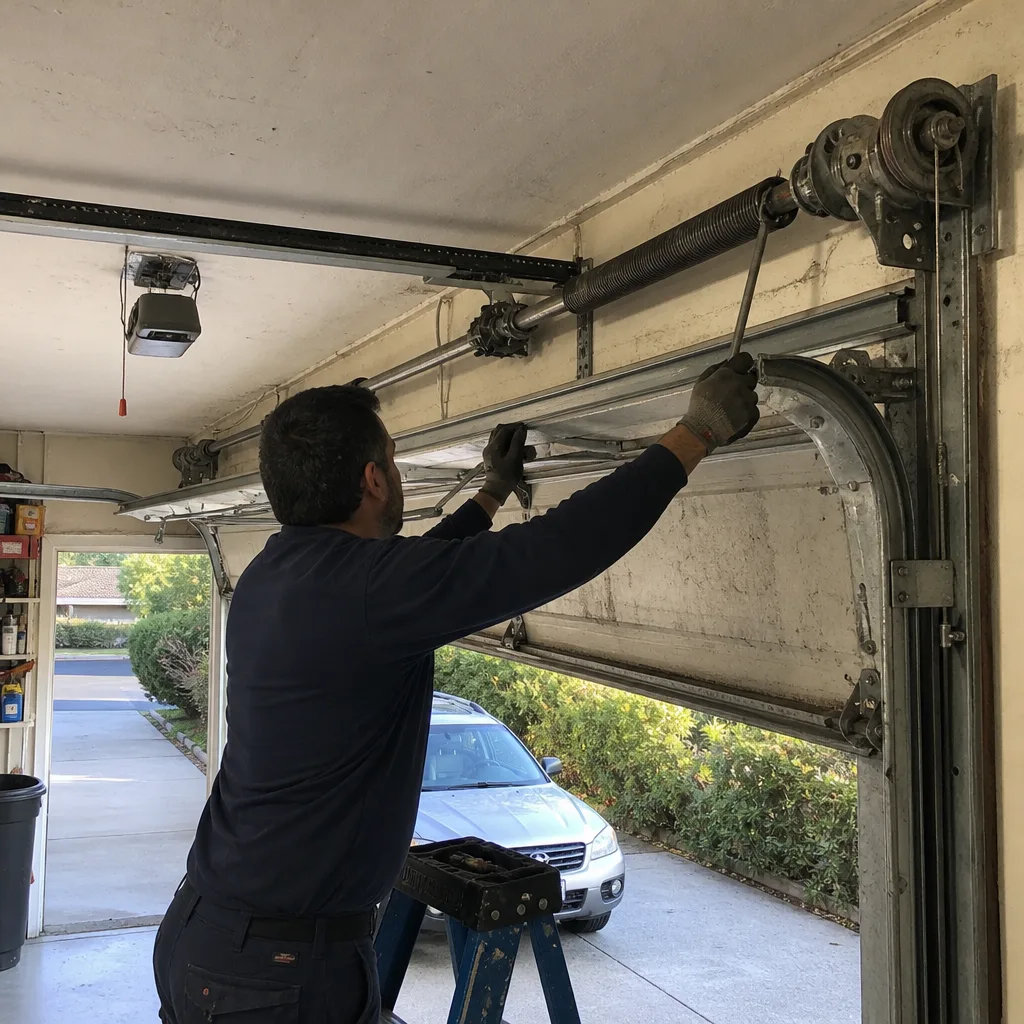 Before
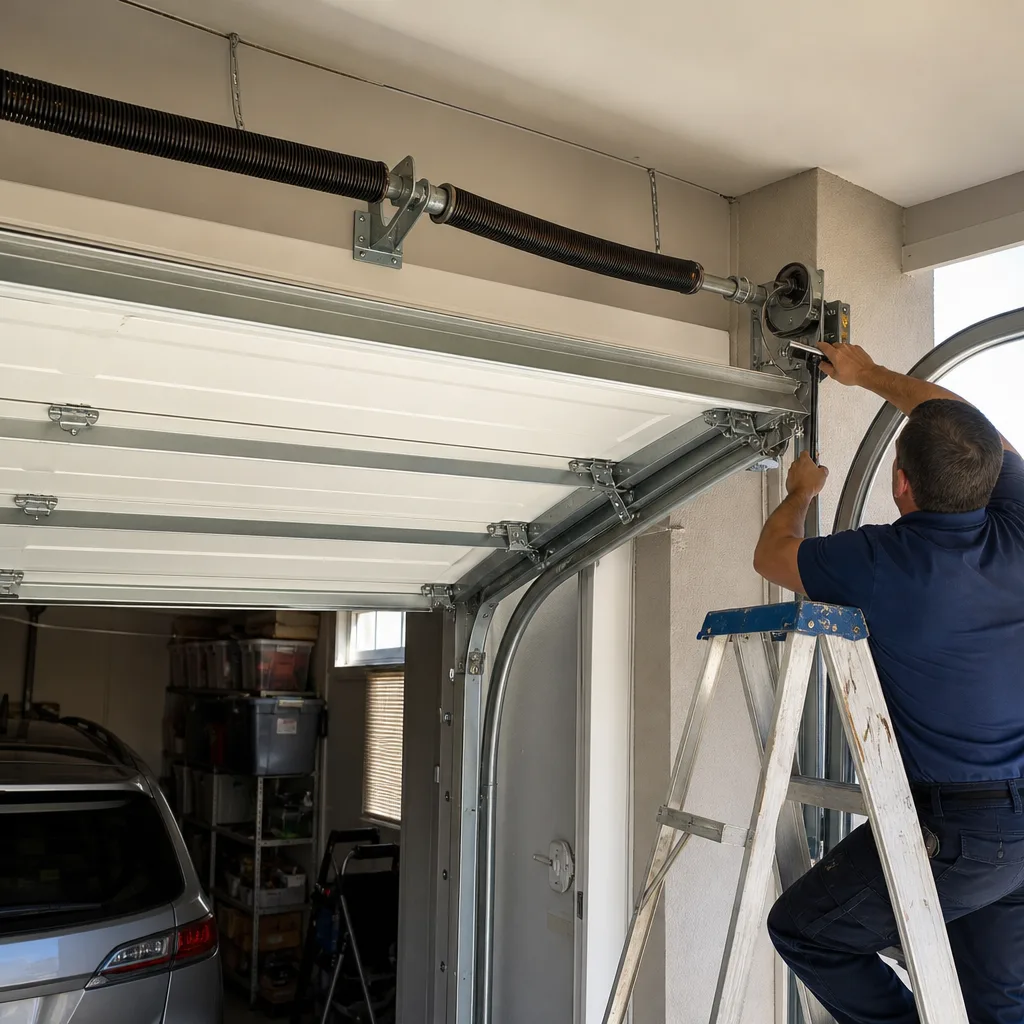 After
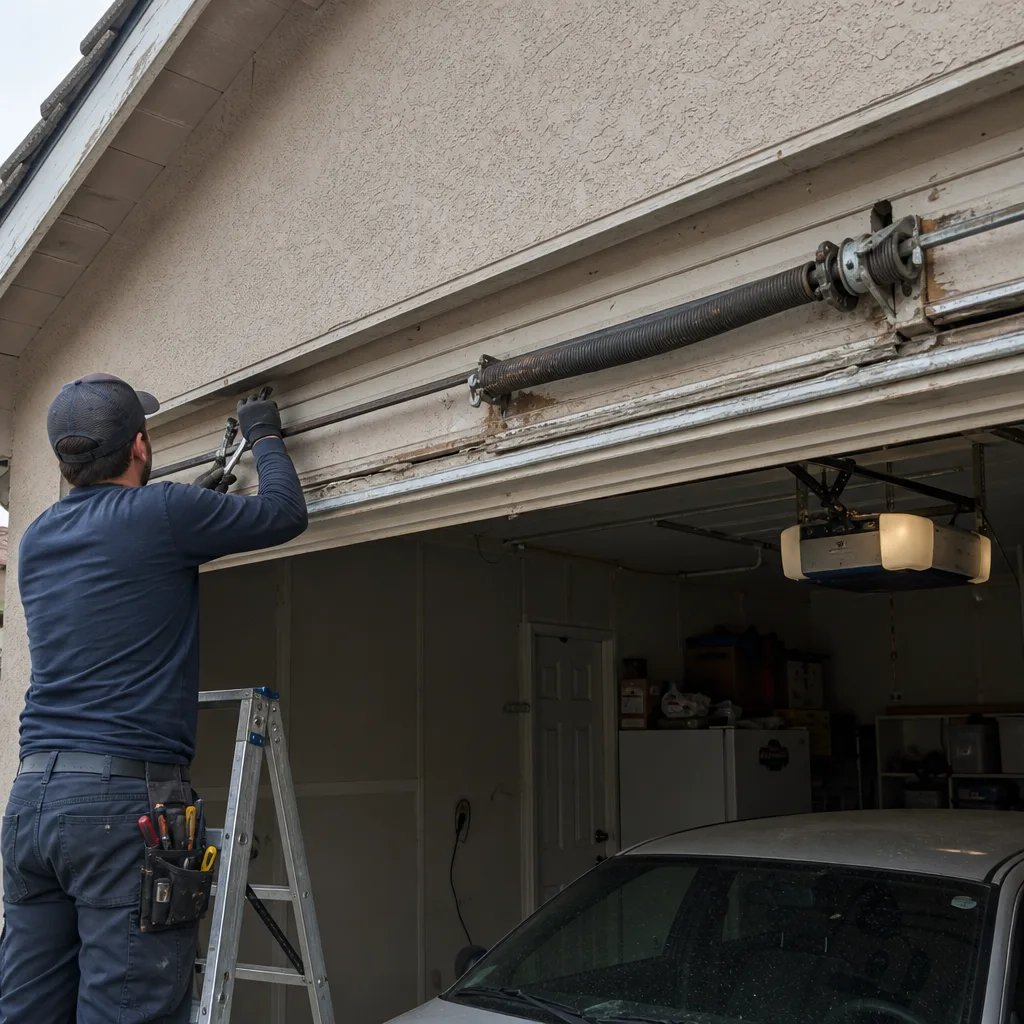 Before
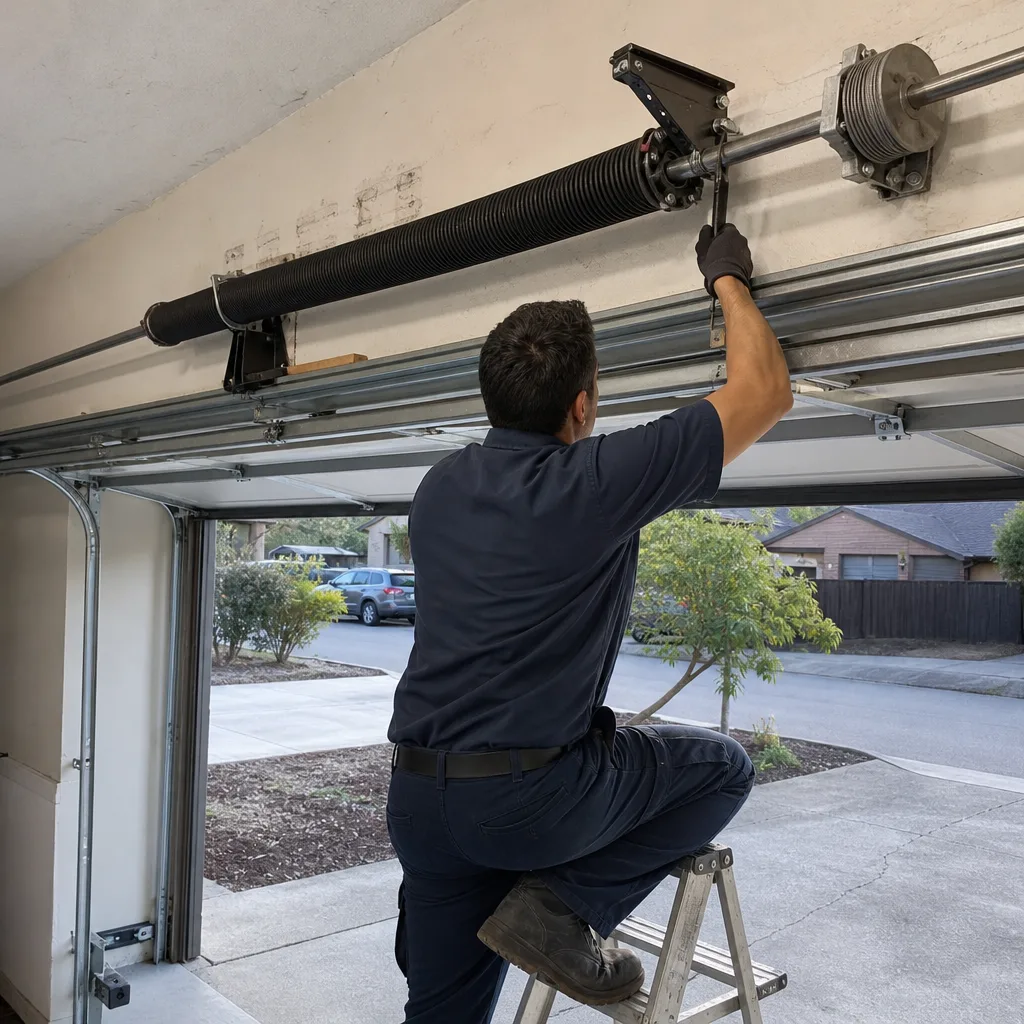 After
When to Call a Professional
Garage door replacement is one of the few home improvement projects where the install quality matters as much as the product. A door hung with misaligned tracks, a miscalibrated spring tension, or a mismatched opener will fail early and require correction. If you’re facing a spring that has snapped, a cable that has frayed, or a panel that’s been knocked off its track, do not attempt to re-tension or re-hang the door yourself. The torsion spring on a typical double door is under several hundred pounds of rotational force, and a spring that lets go can cause serious injury. This is not a ladder-and-wrench job. If the door won’t move, if it’s off-track, or if the spring is visibly broken, leave it alone and call a technician who handles these systems daily. Bluewater Garage Door Service offers free estimates in Carmel Valley. Call (833) 349-4780 and we’ll assess the door, the opener, and the full system before recommending anything.
Frequently Asked Questions
The best garage door brand for a Carmel Valley home is the one that meets your exposure, HOA, and budget requirements, which for most homes means an Amarr, Wayne Dalton, or Raynor door with 24-gauge steel and sandwich construction. Brand is less important than gauge, construction method, and local parts availability.
A standard 16×7 garage door replacement in Carmel Valley typically runs between $1,800 and $4,500 depending on steel gauge, insulation level, and construction method, with carriage-house designs starting around $4,000. The price should always be quoted and agreed before work starts. Call (833) 349-4780 for an exact quote for your specific opening size and style.
Most Carmel Valley HOAs restrict garage door colors to a community-defined palette of warm neutrals, and many also specify panel style and window placement. Pull your HOA’s architectural guidelines before selecting a door, and confirm the brand offers your required color as a stock SKU to avoid custom-order delays.
Amarr and Wayne Dalton both maintain strong distribution networks serving San Diego County, which means replacement panels and proprietary parts are typically available same-day or next-day. Raynor also has solid regional access. Parts availability matters more than brand prestige when you’re waiting for a repair.
In Carmel Valley’s mild coastal climate, an R-12 door is functionally adequate for most attached garages, and R-18 is only worth the premium if your garage is attached to living space or faces direct west sun. Paying for high R-value on a detached garage that stores tools and boxes is usually money that would be better spent on thicker steel gauge.
A 24-gauge garage door uses thicker steel than a 25-gauge door, which makes it more resistant to dents and better suited to west-facing or sun-exposed Carmel Valley homes. The difference is measurable in longevity, not just feel, and buyers comparing brands should compare gauge within the same price tier rather than assuming all steel doors are equivalent.
The Bottom Line
The right garage door for a Carmel Valley home is rarely the one with the biggest marketing presence. It’s the one with thick enough steel for your exposure, enough insulation for your attached-space needs, a panel profile your HOA will approve, and a parts channel that won’t leave you waiting weeks for a repair. Amarr, Wayne Dalton, and Raynor all produce doors that meet those criteria well, and a multi-brand service company can help you evaluate them without a conflict of interest. Start with your exposure and your HOA guidelines, not a brand logo, and the rest of the decision falls into place. If you need a clear-eyed assessment of your current door or want to explore replacement options in Carmel Valley, call (833) 349-4780 for a free estimate, or start with the Bluewater Garage Door Service home page to understand the full scope of what we do.
Written by the team at Bluewater Garage Door Service, serving Carmel Valley since 2013.